Category Archives: examples of good writing

a deft turn of phase


What was once shocking becomes quaint: That’s how it goes. The Charleston now looks like a silly dance, Elvis is just a sweaty guy, nobody’s fainting while watching screenings of “The Exorcist” anymore and jazz is now the province of TURTLENECKED NERDS. We’re assured there was a time when van Gogh’s paintings horrified audiences, but today reproductions of them hang in college dorm rooms. This process is not tragic; as these things lose their power to shock, they reveal new virtues. Nothing stays boundary-pushing forever. …

— “The Greatest Love Story of All Time Is Also the Strangest,” By B.D. McClay, The New York Times, February 14,  2026


— posted by Roger W. Smith

   March 2026

when reporting qualifies as literature

‘A Texas Dad Tried to Kayak His Daughters’ – WSJ 7-6-2025


“A Texas Dad Tried to Kayak to His Daughters. The Girls Texted ‘I Love You.’ ”

By Patience Haggin

The Wall Street Journal

July 6 2025


A story like this would make Hemingway envious.


— posted by Roger W. Smith

   June 6. 2025

How To Write a Eulogy


‘Bill Dalzell’

‘Dr. Colp’


A eulogy is not a Britannica entry, biographical sketch, or “performance review.”

Avoid negatives, but don’t make things up.

Talk from the vantage point of your personal experience with the subject.

Bring it to life with anecdotes. A eulogy is not a summary. The anecdotal material can be “episodic” and does need to be chronological.


— posted by Roger W. Smith

  November 2024

a splendid sentence


“Schwartz’s poems, especially the later ones, are dated. They groan under a freight of leaden rhymes and — Schwartz had a capacious mind — showy philosophical and literary references, spillover from the overstocked pantry that was his mind.”

— Dwight Garner, “Delmore Schwartz’s Poems Are Like Salt Flicked on the World,” The New York Times, April 8, 2024

review of The Collected Poems of Delmore Schwartz, edited by Ben Mazer


— posted by Roger W. Smith

  April 11, 2024

how to write; Exhibit C


Ben and Jerry’s – WSJ 3-19-2024


Posted here:

Ben & Jerry’s Owner Loses Its Taste for Ice Cream

Unilever plans to spin off its ice-cream business, which includes Magnum and Popsicle, and could consider a sale

By Saabira Chaudhuri

The Wall Street Journal

March 19, 2024

My business journalism instructor, Gilbert T. Sewall, was correct when he observed that the Wall Street Journal is notable for the excellence of its writing per se.

The best term I can come up with to describe this piece is limpid.

Everything is covered, succinctly. The facts have all been reported, are all there.

The business issues are made clear.

A layman (i.e., someone not in the business world) can enjoy this piece. Pithy phrases achieve this result:

Ben & Jerry’s owner Unilever has lost its taste for the business.

Ben & Jerry’s, once regarded by analysts as a jewel in Unilever’s crown, has turned into something of a thorn in its side.

Ben & Jerry’s hasn’t shied away from taking a stand on social causes.

Ice cream has been a tough business for … consumer-goods companies. …

Our high school English teacher taught us about topic sentences. Here we see embedded “topic sentences” that ensure that the reader does not get lost and gets the import of the piece.


posted by Roger W. Smith

   March 2024

how to write a book review


Exemplified by … MYSELF.

What I would say (advise) is: cover the content of the book, what it’s about, what should be noted.

And: give your reviewer’s opinion of the book and whether it (implicitly) is worth reading.


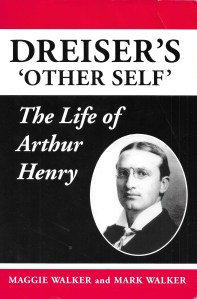
Roger W. Smith review of Arthur Henry bio – Dreiser Studies, winter 2005


— posted by Roger W. Smith

March 2024

how to write; Exhibit B


‘Rare Six-Planet System Discovred in Milky Way’ – WSJ 11-29-2023


Posted here is the following article (text plus marvelous photos):

Rare Six-Planet Star System Discovered in Milky Way: Worlds orbiting a sun-like star 100 light-years from Earth could unlock secrets surrounding the formation of our solar system

By Aylin Woodward

The Wall Street Journal

November 29, 2023

https://www.wsj.com/science/space-astronomy/space-discovery-exoplanets-earth-f50ad103?mod=Searchresults_pos1&page=1


I have been studying writing all my life. I know a good writer (and good writing) when I see one.

Both the famous ones and writers whom I encounter in my daily reading.

Aylin Woodward is a science writer for The Wall Street Journal. Her work is superb.


“A family of six gaseous worlds circling like rhythmic dervishes around a sun-like star will soon help astronomers better understand how planetary systems like our own formed and evolved.

“This newly discovered system, about 100 light-years from Earth, is unusual because its planets orbit a bright host star in a pattern that appears unchanged since its birth at least 4 billion years ago, according to a study published Wednesday in the journal Nature.”

This is a very effective lead. Note how in the first paragraph, in just once sentence, the whole article is “capsulized.” The scope and importance of the subject, the findings, are stated with admirable concision.

The rest of the piece speaks for itself. My high school English teacher would have given it an A+.


I know from experience how difficult it is to adhere to word limits and write a brief article which reads well and sustains reader interest, while getting all the facts in (no easy task) and making their significance clear. Often the latter involves quotes — in this case from experts whom the author, Ms. Woodward, interviewed. All the facts and quotes have to be blended in skillfully without interrupting the flow of the piece.

While never losing sight of the overall significance of the findings and their import, This is done by the writer adhering to principles of writing such as unity and coherence

All of the best writers — including novelists — do this: mix the general with the specific. facts (narration) with exposition.


— posted by Roger W. Smith

   November 30, 2023

George Eliot — again


Life did change for Tom and Maggie; and yet they were not wrong in believing that the thoughts and loves of these first years would always make part of their lives. We could never have loved the earth so well if we had had no childhood in it,—if it were not the earth where the same flowers come up again every spring that we used to gather with our tiny fingers as we sat lisping to ourselves on the grass; the same hips and haws on the autumn’s hedgerows; the same redbreasts that we used to call “God’s birds,” because they did no harm to the precious crops. What novelty is worth that sweet monotony where everything is known, and loved because it is known?

The wood I walk in on this mild May day, with the young yellow-brown foliage of the oaks between me and the blue sky, the white star-flowers and the blue-eyed speedwell and the ground ivy at my feet, what grove of tropic palms, what strange ferns or splendid broad-petalled blossoms, could ever thrill such deep and delicate fibres within me as this home scene? These familiar flowers, these well-remembered bird-notes, this sky, with its fitful brightness, these furrowed and grassy fields, each with a sort of personality given to it by the capricious hedgerows,—such things as these are the mother-tongue of our imagination, the language that is laden with all the subtle, inextricable associations the fleeting hours of our childhood left behind them. Our delight in the sunshine on the deep-bladed grass to-day might be no more than the faint perception of wearied souls, if it were not for the sunshine and the grass in the far-off years which still live in us, and transform our perception into love.

— George Eliot, The Mill on the Floss

MARVELOUS


— posted by Roger W. Smith

   June 2023

parallelism


‘The ordeals of ‘litel clergeon’* and Cambridge freshman are circumstantially very different, and essentially very much the same.”

— Abbie Findlay Potts, Wordsworth’s Prelude: A Study of Its Literary Form (Cornell University Press, 1953), pg. 283

*a schoolboy in Chaucer’s The Prioresses Tale


*****************************************************

A splendid sentence by a magnificent writer.


— posted by Roger W. Smith

   March 2023

a genius for simile


Jason Gay wrote:

Baseball [has] a clock [now].

This is how it should be, and how baseball once was. Have pitchers pitch. Have batters bat. How much of your existence have you already surrendered to this maddening game, which dawdles like an oblivious customer in an airport Starbucks–a tall is the small one, right–as your flight announces its final boarding? [italics added]

— “Thought Baseball Games Were Too Slow. Now They’re Too Fast?,” By Jason Gay, The Wall Street Journal, February 27, 2023


— posted by Roger W. Smith

   March 2023