‘
See my post:
— Roger W. Smith
June 2024
“Schwartz’s poems, especially the later ones, are dated. They groan under a freight of leaden rhymes and — Schwartz had a capacious mind — showy philosophical and literary references, spillover from the overstocked pantry that was his mind.”
— Dwight Garner, “Delmore Schwartz’s Poems Are Like Salt Flicked on the World,” The New York Times, April 8, 2024
review of The Collected Poems of Delmore Schwartz, edited by Ben Mazer
— posted by Roger W. Smith
April 11, 2024
A native of Langford, Ireland, McNally’s murder has left communities on both sides of the Atlantic “in a state of shock” since the Friday attack.
— “Boyfriend charged in death of ‘sweet, innocent’ Irish beauty stabbed inside NYC pub: ‘We are heart broken’ ,” By Amanda Woods and Alex Oliveira, New York Post, April 2 2024
Is this taught in high school English classes anymore?
— posted by Roger W. Smith
April 2, 2024
Ben and Jerry’s – WSJ 3-19-2024
Posted here:
Ben & Jerry’s Owner Loses Its Taste for Ice Cream
Unilever plans to spin off its ice-cream business, which includes Magnum and Popsicle, and could consider a sale
By Saabira Chaudhuri
The Wall Street Journal
March 19, 2024
My business journalism instructor, Gilbert T. Sewall, was correct when he observed that the Wall Street Journal is notable for the excellence of its writing per se.
The best term I can come up with to describe this piece is limpid.
Everything is covered, succinctly. The facts have all been reported, are all there.
The business issues are made clear.
A layman (i.e., someone not in the business world) can enjoy this piece. Pithy phrases achieve this result:
Ben & Jerry’s owner Unilever has lost its taste for the business.
Ben & Jerry’s, once regarded by analysts as a jewel in Unilever’s crown, has turned into something of a thorn in its side.
Ben & Jerry’s hasn’t shied away from taking a stand on social causes.
Ice cream has been a tough business for … consumer-goods companies. …
Our high school English teacher taught us about topic sentences. Here we see embedded “topic sentences” that ensure that the reader does not get lost and gets the import of the piece.
— posted by Roger W. Smith
March 2024
Exemplified by … MYSELF.
What I would say (advise) is: cover the content of the book, what it’s about, what should be noted.
And: give your reviewer’s opinion of the book and whether it (implicitly) is worth reading.
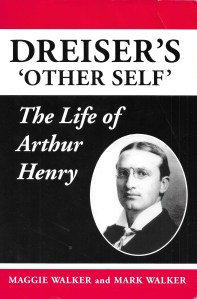
Roger W. Smith review of Arthur Henry bio – Dreiser Studies, winter 2005

— posted by Roger W. Smith
March 2024
This post is comprised of a Word document attached here (above).
— Roger W. Smith
February 2024
‘Rare Six-Planet System Discovred in Milky Way’ – WSJ 11-29-2023
Posted here is the following article (text plus marvelous photos):
Rare Six-Planet Star System Discovered in Milky Way: Worlds orbiting a sun-like star 100 light-years from Earth could unlock secrets surrounding the formation of our solar system
By Aylin Woodward
The Wall Street Journal
November 29, 2023
I have been studying writing all my life. I know a good writer (and good writing) when I see one.
Both the famous ones and writers whom I encounter in my daily reading.
Aylin Woodward is a science writer for The Wall Street Journal. Her work is superb.
“A family of six gaseous worlds circling like rhythmic dervishes around a sun-like star will soon help astronomers better understand how planetary systems like our own formed and evolved.
“This newly discovered system, about 100 light-years from Earth, is unusual because its planets orbit a bright host star in a pattern that appears unchanged since its birth at least 4 billion years ago, according to a study published Wednesday in the journal Nature.”
This is a very effective lead. Note how in the first paragraph, in just once sentence, the whole article is “capsulized.” The scope and importance of the subject, the findings, are stated with admirable concision.
The rest of the piece speaks for itself. My high school English teacher would have given it an A+.
I know from experience how difficult it is to adhere to word limits and write a brief article which reads well and sustains reader interest, while getting all the facts in (no easy task) and making their significance clear. Often the latter involves quotes — in this case from experts whom the author, Ms. Woodward, interviewed. All the facts and quotes have to be blended in skillfully without interrupting the flow of the piece.
While never losing sight of the overall significance of the findings and their import, This is done by the writer adhering to principles of writing such as unity and coherence
All of the best writers — including novelists — do this: mix the general with the specific. facts (narration) with exposition.
— posted by Roger W. Smith
November 30, 2023
Emerson, ‘Montaigne; Or, The Skeptic’
I was eager to read Ralph Waldo Emerson’s essay “Montaigne; Or, The Skeptic,” which was published in his Representative Men: Seven Lectures (1850). I was disappointed and had a similar experience in reading Emerson that I have discussed in an earlier post:
Non-Sequaciousness (Emerson; also Carlyle)
Among the objectives of my posts on this site is to discuss “bad writing” and why even purportedly good writers fail.
I am very interested in Montaigne. I wanted to know what Emerson had to say about him. On about the seventh or eighth page of the essay, I found what I was looking for.
I found it tough to wade through the long introduction, and I had to dig and “extract” the stuff that I was interested in and the ((to me) salient points from a mass of glowing verbiage.
In his essay on non-sequaciousness (published in 1900) , Patrick Dillon states
… Emerson is, of all modern writers, the least fitted to be relied on as a literary model. The sparks he emits and the shocks he causes are dazzling and exciting; and his ideas are brilliant as the cascade’s spray; but it will be admitted that the effect of such a writer, taken as a model £or literary novices, must be in the last degree disastrous. The youthful mind is vastly inclined to vagueness, and, like Milton’s spirits, “finds no end, in wandering mazes lost.” Whatever, then, tends to encourage this tendency, must be fatal to that ratiocination, which, says Cardinal Newman, “is the great principle of order in thinking, reducing chaos to harmony.
Try reading the first few pages or paragraphs of Emerson’s essay for yourself.
— posted by Roger W. Smith
November 2023